


The healthcare sector, the cornerstone of our well-being, faces unprecedented pressures. From the relentless demands of patient care to rapidly evolving medical landscapes, healthcare professionals are constantly on the front lines. Yet, behind every dedicated nurse, doctor, and administrator lies a crucial support system: Human Resources.
In this comprehensive guide, we delve into the most pressing HR challenges currently impacting healthcare organizations globally: the pervasive issues of burnout, persistent staffing shortages, and the urgent need for robust mental health support. More importantly, we’ll explore how strategic HR interventions and innovative technological solutions can transform these challenges into opportunities for a more resilient, healthier, and thriving healthcare workforce.
The Triple Threat: Unpacking Healthcare’s Core HR Challenges
The intersection of intense work environments, emotional labor, and critical responsibilities creates a unique set of HR hurdles in healthcare.
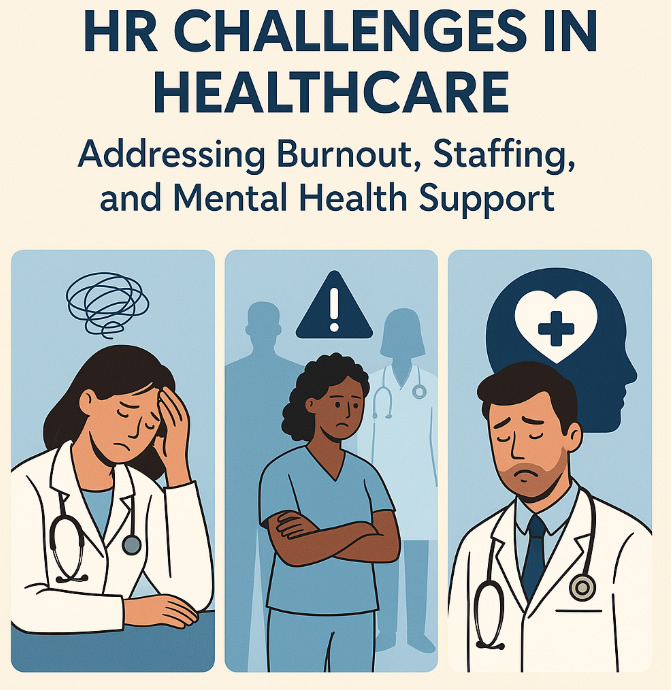
1. Battling the Burnout Epidemic in Healthcare
Burnout among healthcare professionals is not just a buzzword; it’s a critical crisis affecting patient care quality, staff retention, and organizational productivity. Defined by emotional exhaustion, depersonalization, and a reduced sense of personal accomplishment, burnout is rampant across all healthcare roles.
- Impact: Leads to increased medical errors, lower patient satisfaction, higher absenteeism, and ultimately, a significant financial burden on healthcare institutions due to high turnover.
- Root Causes: Long working hours, heavy workloads, administrative burden, lack of work-life balance, inadequate support systems, and the emotional toll of critical care.
The global healthcare system grapples with a severe and escalating shortage of qualified personnel. This isn’t just about finding enough doctors or nurses; it’s about filling roles across the entire spectrum, from allied health professionals to administrative staff.
- Impact: Forces existing staff to work longer shifts, exacerbates burnout, limits access to care, and compromises service quality.
- Root Causes: Aging workforce, insufficient educational pipeline, maldistribution of professionals, high attrition rates, and intense competition for talent.
3. Prioritizing Mental Health Support for Frontline Workers
The psychological toll on healthcare workers, especially post-pandemic, is immense. Anxiety, depression, PTSD, and moral injury are increasingly prevalent, yet often stigmatized or unaddressed.
- Impact: Directly contributes to burnout, reduces productivity, increases presenteeism (being at work but not fully functional), and can lead to long-term health issues.
- Root Causes: Exposure to trauma, ethical dilemmas, demanding work-life, lack of peer support, and insufficient access to mental health resources.
Strategic HR Interventions: Building a Resilient Healthcare Workforce
Addressing these challenges requires a multi-faceted and proactive approach from HR departments. It’s about shifting from reactive problem-solving to strategic workforce planning and employee well-being initiatives.
- Proactive Recruitment & Retention:
- Data-Driven Forecasting: Utilizing HR analytics to predict future staffing needs and potential attrition.
- Employer Branding: Highlighting unique benefits, culture, and opportunities within the healthcare organization.
- Flexible Staffing Models: Exploring part-time, per diem, and remote options where feasible.
- Stay Interviews: Proactively understanding why employees stay and addressing potential issues before they lead to resignations.
- Robust Well-being Programs:
- Comprehensive EAPs (Employee Assistance Programs): Offering confidential counseling and support services.
- Mindfulness & Stress Reduction: Implementing programs and resources to help staff manage stress.
- Peer Support Networks: Fostering environments where colleagues can support each other.
- Work-Life Balance Initiatives: Promoting flexible scheduling, adequate time off, and discouraging excessive overtime.
- Investing in Technology & Automation:
- HRIS/HCM Systems: Streamlining administrative tasks to free up HR and clinical staff.
- AI-Powered Recruitment: Accelerating candidate sourcing and screening.
- Performance Management Tools: Providing regular feedback and recognizing contributions to prevent burnout.
- Learning & Development Platforms: Offering accessible training for skill enhancement and career progression.

Top HR Software & Service Providers for Healthcare (A Comparative Look)
Choosing the right HR technology and consulting partners is crucial for implementing effective strategies. Below is a comparative overview of leading providers that cater specifically to the healthcare sector, offering solutions for the challenges discussed.
Disclaimer: The following table provides general information and examples of service offerings. Pricing varies significantly based on organization size, specific modules chosen, and contract terms. Always request detailed quotes and demos for your specific needs.
| Provider Name | Core Focus in Healthcare HR | Key Service/Software Areas | Typical Target Client (Size/Type) | Indicative Cost Range | Noteworthy Features for Healthcare |
|---|---|---|---|---|---|
| Workday | Comprehensive HCM for large healthcare systems | Core HR, Payroll, Talent Mgmt., Workforce Planning, Analytics, Benefits | Large Hospitals, Health Networks | $$$$ (Enterprise-level) | Unified platform, robust analytics for complex organizations, scheduling, compliance. |
| ADP | Payroll, HR & Benefits for various healthcare entities | Payroll, Time & Attendance, HR Management, Benefits Admin, Compliance | Small to Large Clinics, Labs, Hospitals | $$-$$$ (Scalable) | Strong payroll engine, compliance support for healthcare regulations, EAPs. |
| UKG (Ultimate Kronos Group) | Workforce management, HR & Payroll for all sizes | Time & Attendance, Scheduling, HR, Payroll, Talent Mgmt., Analytics | All sizes, strong in shift-based | $$$ (Mid-market to Enterprise) | Advanced scheduling optimization for clinical staff, predictive analytics for staffing. |
| Ceridian Dayforce | Modern HCM with emphasis on real-time payroll & workforce mgmt | Payroll, Time & Attendance, HR, Talent, Benefits, Workforce Mgmt. | Mid-market to Large Healthcare | $$$ (Mid-market to Enterprise) | Continuous payroll, compliance focus, intelligent scheduling, global capabilities. |
| Paychex | Payroll, HR, Benefits for smaller healthcare practices | Payroll, HR Admin, Time & Attendance, Benefits, Compliance, PEO | Small to Mid-sized Clinics, Dental Offices | $ – $$ (Small to Mid-market) | User-friendly for smaller teams, dedicated support, tax compliance for healthcare SMBs. |
| BambooHR | Intuitive HRIS for growing healthcare organizations | Core HR, Applicant Tracking, Onboarding, Performance, Reporting | Small to Mid-sized Clinics, Rehab Centers | $ (Per employee/month) | Easy to use, excellent for managing employee data and streamlining basic HR functions. |
| MeridianLink (Focus on HC) | Specialized solutions for healthcare staffing & recruitment | Applicant Tracking (ATS), Onboarding, Compliance, Credentialing | Hospitals, Health Systems, Staffing Agencies | $$$ (Solution-specific) | Deep expertise in healthcare recruitment, credentialing workflows, compliance tracking. |
| TherapyNotes (Example) | EHR & Practice Management with HR features built-in | Patient Records, Scheduling, Billing, Limited Staff Management | Mental Health Practices, Small Clinics | $ (Per user/month) | Integrated client management with basic staff/HR tools for therapists. |
Note: Pricing is highly indicative. $ = budget-friendly for small teams; $$= mid-range; $$$ = higher-tier for mid-large organizations; $$$$ = enterprise-grade.
Beyond Software: The Role of HR Consulting in Healthcare
For complex challenges, or for organizations without dedicated in-house HR expertise, HR consulting firms offer invaluable support. They can assist with:
- Workforce Planning & Strategy: Optimizing staffing models, succession planning.
- Compensation & Benefits: Designing competitive packages to attract and retain talent.
- Compliance & Risk Management: Navigating complex healthcare regulations (e.g., HIPAA, specific state licensing).
- Employee Relations & Conflict Resolution: Managing workplace disputes, fostering positive environments.
- Leadership Development: Training healthcare leaders to better support their teams and prevent burnout.
Leading HR Consulting Firms Serving Healthcare:
- Mercer: Global leader in HR consulting, offering deep expertise in healthcare compensation, benefits, and workforce strategy.
- Deloitte Human Capital: Provides broad consulting services, including talent management, organizational design, and HR transformation for healthcare.
- PwC People and Organization: Focuses on human capital strategy, digital HR, and change management within the healthcare sector.
- Specialized Healthcare HR Consultants: Many boutique firms specialize exclusively in healthcare HR, offering tailored solutions for specific challenges like physician recruitment or nurse retention.
Conclusion: Paving the Way for a Healthier Healthcare Workforce
The HR challenges in healthcare – from the silent epidemic of burnout to the critical staffing shortages and the urgent need for mental health support – are immense. However, they are not insurmountable. By strategically leveraging innovative HR technologies, partnering with expert consultants, and adopting a proactive, employee-centric approach, healthcare organizations can foster a more resilient, engaged, and ultimately, healthier workforce.
Investing in your people is investing in the future of healthcare. Explore our marketplace to discover the leading HR software and service providers specialized in the medical and mental health sectors, ready to help you build the strongest team possible.

[…] study focuses on employee wellbeing strategy, mental health at work, and HR trends 2025, providing actionable insights for decision-makers seeking to transform their […]