

Introduction
In 2025, US companies are under pressure to balance rising healthcare costs, talent retention, and employee engagement. One of the most powerful levers is employee wellness — but for CFOs and HR leaders, the question is always the same: Does it pay off?
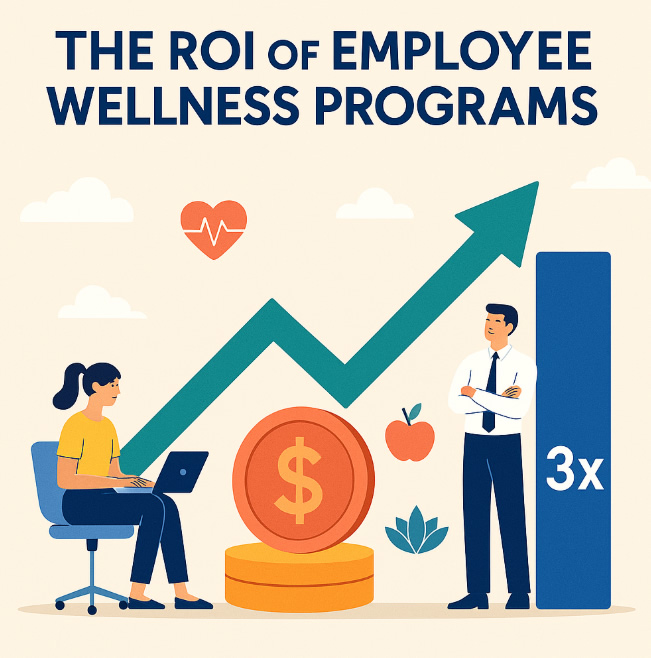
The answer is yes. Multiple studies, including a meta-analysis in Health Affairs, show that well-designed employee wellness programs generate a positive ROI, often between $2.50 and $3.00 for every $1 invested. Beyond the numbers, wellness programs deliver softer but equally critical returns: stronger culture, higher productivity, and a healthier workforce.
If you’re hiring in the US, see our Best Payroll Companies Guide.
Defining ROI in Employee Wellness
When it comes to measuring ROI from employee wellness programs, the impact goes far beyond simple cost savings on health insurance. A comprehensive ROI framework should include:
- Direct healthcare cost reduction
Preventive care and early screenings lower long-term expenses linked to chronic diseases such as diabetes, hypertension, and obesity. US employers implementing wellness initiatives have reported 10–15% lower healthcare claims within three years. - Absenteeism and presenteeism
Traditional ROI analyses often focus on absenteeism (fewer sick days). But presenteeism — employees showing up for work but operating at reduced capacity due to stress, burnout, or poor health — is far costlier. According to the American Productivity Audit, presenteeism costs US businesses over $150 billion annually. Wellness programs targeting mental health and stress management reduce both. - Productivity and performance
Employees who participate in wellness initiatives report higher engagement and focus, translating into measurable productivity gains. SHRM data shows wellness participants are 17% more productive and 21% more profitable compared to non-participants. - Retention and recruitment
Employee turnover is one of the most expensive HR challenges, costing up to 50–200% of an employee’s annual salary depending on the role. Companies that promote wellbeing report turnover rates up to 25% lower. Wellness is also a differentiator in attracting new talent — especially Millennials and Gen Z, who prioritize employers that care about mental health. - Employer brand and compliance
Strong wellness programs enhance reputation and align with ESG goals. They also mitigate risks by ensuring compliance with growing US regulations around workplace health, mental health parity, and psychological safety.
To see which platforms actually drive these financial and cultural outcomes, read also our Top 10 Employee Wellness Solutions for a Healthier Workplace.
Key Data on ROI of Wellness Programs
Healthcare Cost Reduction
- A landmark Health Affairs meta-analysis (Baicker et al.) found that workplace wellness programs yield an average savings of $3.27 in medical costs for every $1 invested.
- Employers running biometric screenings and chronic condition management saw consistent long-term declines in claim costs.
Reduced Absenteeism
- The same analysis found savings of $2.73 in absenteeism costs per $1 spent on wellness.
- On average, wellness participants take 1.5 fewer sick days per year, translating into millions saved for large employers.
Improved Productivity
- Research from Gallup shows employees who feel supported in wellbeing are 69% less likely to actively job-hunt and report higher energy levels at work.
- Deloitte estimates productivity improvements can contribute to an additional 10–11% performance uplift in organizations with comprehensive wellness strategies.
Retention and Engagement
- A meta-review by the RAND Corporation found companies with structured wellness initiatives reduced turnover by up to 25%.
- Wellness-linked engagement programs boost employee Net Promoter Score (eNPS) and lower replacement/recruiting costs.
Real-World Benchmarks
- Johnson & Johnson saved over $250 million in healthcare costs over a decade thanks to their employee wellness program.
- Dow Chemical reported a 2:1 ROI on wellness investments by integrating occupational health with corporate wellness.
- Small businesses adopting platforms like Gusto, Limeade, or Virgin Pulse often report ROI through reduced insurance premiums and improved retention, even at team sizes under 100.
Reducing absenteeism and presenteeism often starts with practical initiatives. Explore our Top 10 Mental Health Activities to Improve Employee Wellbeing at Work for actionable ideas.
ROI Metrics of Employee Wellness Programs
| ROI Dimension | Impact | Key Data | Source / Benchmark |
|---|---|---|---|
| Healthcare Costs | ↓ Medical claims and long-term expenses | Average $3.27 saved per $1 invested | Health Affairs (Baicker et al.) |
| Absenteeism | ↓ Sick days per employee | 1.5 fewer sick days/year; $2.73 saved per $1 | Meta-analysis + CDC estimates |
| Presenteeism | ↑ Focus and capacity at work | $150B annual US cost reduced via wellness | American Productivity Audit |
| Productivity | ↑ Output and engagement | 17% more productive; 21% more profitable | SHRM, Gallup |
| Retention | ↓ Turnover and hiring costs | Up to 25% lower turnover rates | RAND Corporation review |
| Employer Brand | ↑ Attraction of top candidates | Wellbeing cited as top 3 decision factor | Gallup, Deloitte surveys |
| Case Studies | Proven savings & ROI | J&J saved $250M; Dow Chemical 2:1 ROI | Corporate wellness reports |
Real-World Examples
- Johnson & Johnson: Their long-term wellness program reportedly saved the company over $250 million in healthcare costs across a decade.
- Dow Chemical: Achieved a 2-to-1 ROI on wellness through a combination of occupational health and employee engagement initiatives.
- SMBs in the US: Even smaller firms using platforms like Gusto or Virgin Pulse report savings by integrating wellness with payroll and benefits.
Measuring ROI Effectively
One of the biggest mistakes companies make is launching a wellness program without setting up clear metrics. To convince finance leaders and secure ongoing investment, HR teams need to treat wellness like any other strategic business initiative with measurable KPIs.
Key areas to measure include:
- Healthcare claims data
Compare medical claims and insurance utilization before and after the program. Look at trends in chronic condition management (diabetes, hypertension) and preventive screenings. Many US companies partner with insurers to track these metrics directly. - Absenteeism rates
Track average sick days per employee per year and correlate changes with program participation. A reduction of even 1 day per employee annually can save thousands of dollars in a 100-person startup. - Employee engagement scores (eNPS)
Wellness initiatives directly influence how employees perceive their workplace. Tracking eNPS or pulse survey results every quarter provides a clear picture of whether wellbeing support is improving morale and engagement. - Turnover and retention costs
Calculate the average cost of replacing an employee (recruitment + training + lost productivity). Then measure whether wellness participation correlates with higher retention. Some organizations segment retention data between participants vs. non-participants for clarity. - Productivity metrics
Go beyond self-reported surveys by reviewing actual output per employee, project completion rates, or customer satisfaction scores. For roles with measurable deliverables (sales, support), productivity gains are often the strongest ROI driver.
Best practice: Start with a baseline assessment of healthcare costs, absenteeism, and turnover before launching wellness initiatives. Then conduct quarterly business reviews (QBRs) with finance and HR to show progress against KPIs and refine the program.
The Bigger Picture: Beyond Financial ROI
While financial ROI is essential for CFOs, the true impact of employee wellness goes far beyond the balance sheet. Wellness initiatives create strategic, long-term value that is harder to quantify but critical for organizational success.
Key non-financial benefits include:
- Improved morale and company culture
Wellness programs signal to employees that leadership cares about their wellbeing. This fosters psychological safety, trust, and loyalty — all of which are cornerstones of a high-performing culture. - Stronger employer brand
In today’s talent market, candidates actively evaluate companies based on how they support wellbeing. A robust wellness strategy becomes a competitive differentiator, making it easier to attract top talent without relying solely on higher salaries. - Alignment with ESG and CSR strategies
Wellness initiatives are increasingly tied to Environmental, Social, and Governance (ESG) reporting and Corporate Social Responsibility (CSR) commitments. By prioritizing employee health, companies demonstrate a measurable commitment to the “S” in ESG, which resonates with investors and stakeholders. - Resilience in times of crisis
Organizations that invest in wellbeing are better prepared to weather crises such as economic downturns or public health emergencies. Employees with strong mental and physical health adapt more quickly and maintain productivity under stress. - Innovation and collaboration
A healthy workforce is more creative and collaborative. Wellness programs reduce stress and burnout, enabling employees to bring fresh ideas and energy to problem-solving.
For a forward-looking perspective on how wellness is evolving, check out our Employee Wellness Trends in 2025: What US Companies Need to Know.
👉 In short, the bigger picture ROI isn’t just about reducing costs — it’s about building a company that people want to work for, stay at, and recommend to others, while aligning with broader social and governance goals.
FAQ on the ROI of Employee Wellness Programs
How much ROI do wellness programs deliver?
Well-designed wellness programs typically deliver a return of $2.50–$3.00 for every $1 invested, primarily through reduced healthcare costs and lower absenteeism. Some large companies have reported even higher returns after several years of sustained implementation.
Do small businesses also see ROI from wellness programs?
Yes. Even startups and SMBs can see ROI by focusing on low-cost, high-impact initiatives such as mental health support, telehealth access, and flexible PTO. Savings often come from fewer sick days, better retention, and lower insurance premiums.
How long does it take to see ROI from wellness programs?
Most organizations begin to see measurable ROI within 12–18 months, especially in absenteeism and healthcare claims. However, cultural and engagement benefits often appear much sooner, sometimes within the first 6 months.
What are the best metrics to measure ROI?
The most common metrics include healthcare claims, absenteeism, retention, employee engagement scores (eNPS), and productivity. Many organizations also track presenteeism and employee satisfaction surveys.
Is ROI the only reason to invest in wellness programs?
No. While ROI is important, wellness programs also deliver intangible benefits like improved morale, stronger employer branding, and alignment with ESG/CSR goals. These “softer” returns often make the biggest long-term impact.
Get Your HR Brand Featured on HRYP
Reach HR and business technology audiences with sponsored editorial coverage, vendor visibility and managed launch campaigns built for HR tech, SaaS and AI brands.
Sponsored editorial features from $170, with managed visibility and launch packages available.
